
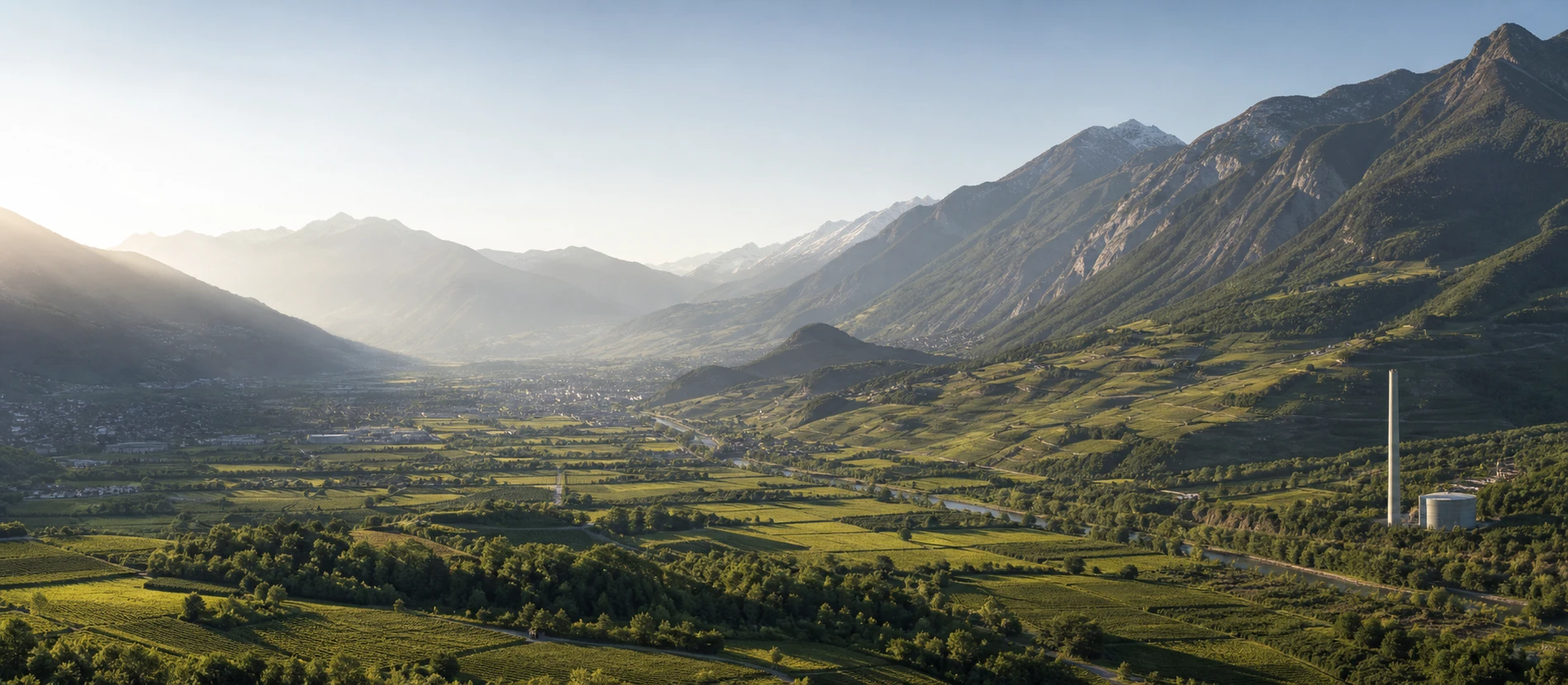
The first Swiss biofuel refinery.

By 2029, Helvoil aims to lead Switzerland’s transition to next-generation renewable biofuels.

Where we are

Built on a strategic Swiss industrial platform.

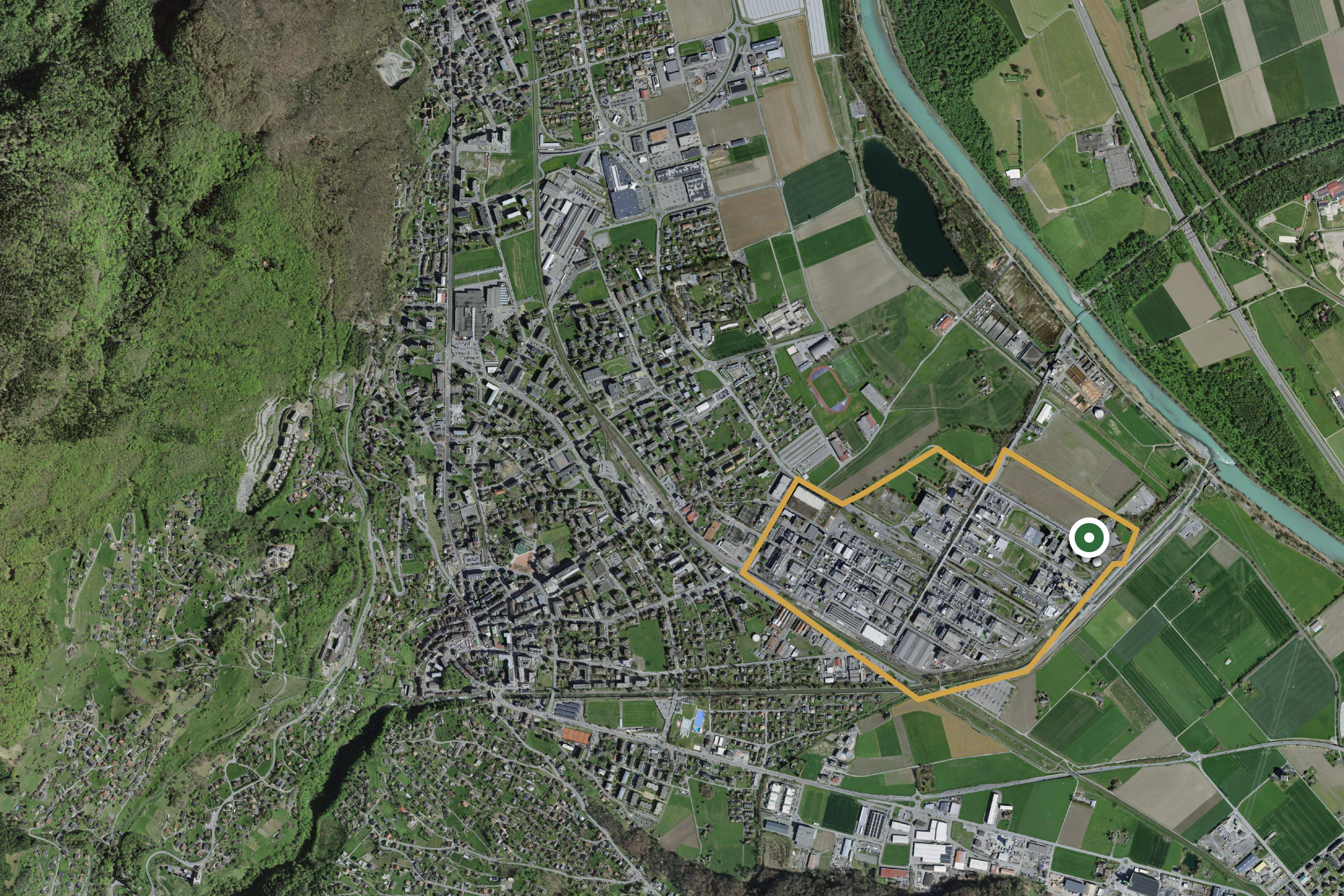
Helvoil is establishing its refinery on the CIMO site in Monthey (VS), one of Switzerland’s five strategic industrial sites and a chemical hub that accounts for a major share of Valais exports.

Safety

The site is a centre of excellence for HSSE and ensures that all operations are performed safely for its employees, other site users and the local community. The site operates its own crisis centre, fire brigade and first-aid service, and is closely connected to the city of Monthey and the Canton of Valais in case of emergencies.

Shared Infrastructure

The plant is fully integrated with the site’s gas infrastructure and electricity network. The site further provides steam, cooling water, wastewater treatment facilities and instrument air. Rail and road facilities enable Helvoil to receive its raw materials and deliver more than 80% of its finished product by rail. Investment in the new rail terminal further optimises Helvoil’s supply chain.

Local Expertise

The Monthey region and the intercantonal vocational school in chemistry provide a large pool of talented individuals who can be employed by Helvoil. The presence of the CIMO site has created a microcosm of engineering and maintenance SMEs. Together, these factors strengthen the region’s pool of chemical and industrial knowledge and experience.

Regulatory Knowledge

The large chemical cluster in the Valais region gives the regional authorities deep experience in chemical processing technology and its safe operation. This helps speed up the regulatory processes needed to construct and operate chemical plants.

By integrating into CIMO rather than starting from scratch, Helvoil shortens its time to operation, minimises its footprint and inherits a world-class safety and environmental framework.

Aerial view of Monthey with the extended CIMO perimeter outlined in gold and the approximate future Helvoil facility marked
Future Helvoil facility, approximate locationSource: Federal Office of Topography swisstopo

What we are planning to build

A Swiss first, designed and constructed responsibly.

Part 1

The refinery

Developed in close consultation with the commune of Monthey, the canton of Valais and the Swiss Confederation, and through ongoing dialogue with local residents and environmental associations, Helvoil’s refinery will be a first for the country. From 2029, Switzerland will have its first biofuels refinery, producing in excess of 80,000 tonnes per year of HVO, SAF and Bionaphtha combined.

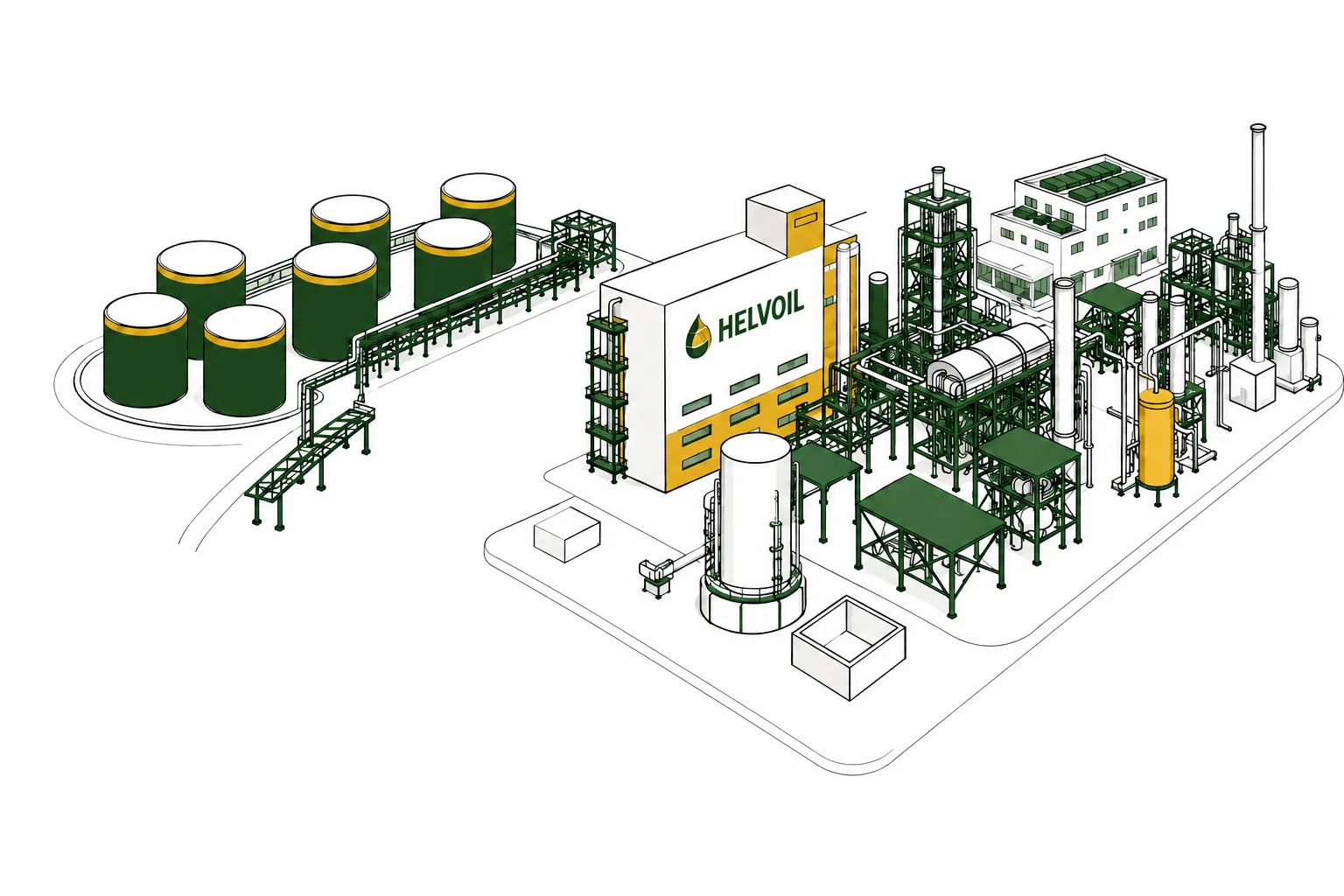
The plant is built around four core process steps and is complemented by a completely new tank terminal for feedstock and finished products. The tank terminal is completed by a rail loading and unloading facility and a truck loading and unloading facility. The plant and terminal are built using Best Available Technology (BAT) and to the highest safety and environmental standards.
Part 2

A safe and eco-friendly plant

Meeting every requirement set by the relevant authorities on safety and environmental protection is only the starting point. By applying best practice and going beyond existing regulation wherever possible, Helvoil will protect employees, partners and the surrounding community.

Working within the CIMO platform allows incoming feedstock and outgoing HVO, SAF and naphtha to travel primarily by rail, lowering logistics emissions, noise and local pollution.

Part 3

A future employer for the canton

Once operational in 2029, Helvoil expects to create directly around 50 skilled jobs in Valais, ranging from engineers and process operators to sustainability and compliance specialists.

The project will contribute to the economic vitality of the bilingual canton and help anchor high-value industrial expertise in the region.

Isometric illustration of the Helvoil renewable-fuels refinery, storage tanks and processing equipment
Illustrative visualization of the future Helvoil refinery

Which technology

From waste to finished fuel.

Helvoil converts waste- and residue-based feedstocks (lipids) into drop-in renewable fuels using Desmet’s pre-treatment technology and Topsoe’s HydroFlex and H2Bridge technologies. All these technologies have been in operation in multiple plants around the globe.

  1. 01

    Pre-treatment

    Incoming used cooking oil, animal fats and other residual oils are purified to protect the catalysts and ensure consistent quality.

  2. 02

    Hydrotreating

    The feedstock reacts with hydrogen over catalysts, removing oxygen and converting the oils into deoxygenated, predominantly paraffinic hydrocarbon intermediates.

  3. 03

    Isomerisation

    The molecules are restructured to give excellent cold-flow properties, including reliable performance in Alpine conditions.

  4. 04

    Fractionation

    The product is separated into finished HVO, SAF and Bionaphtha.

Each batch is tracked from feedstock origin to delivery, produced to international specifications such as EN 15940 and ASTM D7566, and certified under ISCC sustainability schemes, with verified lifecycle carbon savings of up to 90%.

Our roadmap

From project to production.

Helvoil’s development follows a staged pathway from concept to full operation.


  1. 01

    Definition & engineering

    Project definition, feasibility studies, front-end engineering design (FEED) and feedstock-sourcing strategy.

  2. 02

    Permitting & consultation

    Environmental impact assessment, building and operating permits, and ongoing dialogue with authorities, residents and environmental associations.

  3. 03

    Construction & commissioning

    Demolition of existing tanks, installation of the four process units and new storage, followed by commissioning.

  4. 04

    2029 · Start-up

    First production of HVO, SAF and Bionaphtha, distributed to Swiss customers through Helvoil’s distribution subsidiary, Nesource AG.